Relationship Struggles

I’ve always said that I’m bad at relationships. In fact, I even started a blog post last week with “I’m bad at relationships” as the opening statement. It’s still sitting somewhere in draft form.

I’ve been mulling over that idea for the past week. It’s one of those ideas that tends to float around in the back of my mind quite often, but it’s been closer to the forefront lately.

I think my adoption has a lot to do with the way that I relate and interact with people. I was watching a show earlier this week that has a strong adoption theme interwoven into the plot, and I think it’s the most fascinating part of the story. It shows the strong desire to connect with family and loved ones, but the hesitancy to really get close and let people in.

This has been my main issue: the struggle between trusting others with the most vulnerable parts of me and trying to acknowledge that there isn’t something inherently wrong that people will somehow discover, then choosing to no longer invest any time in a friendship. It’s something I’ve discovered a lot of adoptees struggle with to some degree. I think it has to do with having the knowledge that somewhere out in the world, there is someone who didn’t want you enough to keep you.

I know there are extenuating circumstances to almost every adoption. I know that in many cases, giving a child up for adoption is the most painful and selfless thing that a mother could ever choose to do. I know that it’s probably not fair to blame attachment and trust issues on a mother who was only trying to make sure her child was given all the opportunities possible. However, knowing these things doesn’t always heal the pain. It doesn’t erase the struggle that I’ll most likely fight for most, if not all, of my life.

I can’t speak for adoptees as a whole, but I know that for me, my relationships have struggled because of my pain connected to my adoption. My adoption story isn’t really one of abuse or despair. I was put up for adoption because my mother was a selfless woman who couldn’t provide what she wanted for me as a single mom, and I think that’s an incredibly brave act. But I see girls who were younger than she was working and fighting every day to give their children every opportunity possible. I see these ladies doing everything in their power because they want to take care of their kids. I see all of this and wonder why my mom wasn’t the same.

Rationally, I know the hurt doesn’t really make sense. I know that my life would have probably been even more difficult. But being given up leaves an emotional scar on your very soul. It’s part of your identity whether you want it to be or not. And unfortunately, it seeps into other aspects of life. If a woman who spent nine months carrying you and essentially nurturing you doesn’t want to continue doing that, how can friends or even a romantic interest think that you’re worth the work and energy for a serious relationship?

So when I say I’m bad at relationships, I think I mostly mean that I’m bad at trusting relationships. No matter how wonderful my friendships are, there’s a tiny voice in the back of my head that whispers that I can’t possibly be worth it for the long haul. Instead of facing the core issue head on, I’ve always tended to just end a lot of my relationships, with friends and otherwise, before they get too close or too involved. My incorrect rationality has always been this: “if I’m not worth keeping around anyway, I might as well end it sooner to avoid as many hurt feelings.”

It’s stupid and ridiculous and probably shouldn’t even be an issue, but your past and experiences can do a lot to effect your subconscious. They don’t have to control it as long as you’re aware of them, so I suppose that’s what this post is supposed to accomplish: acknowledging the issue with the intent to be more aware of it and hopefully more willing to try and change.
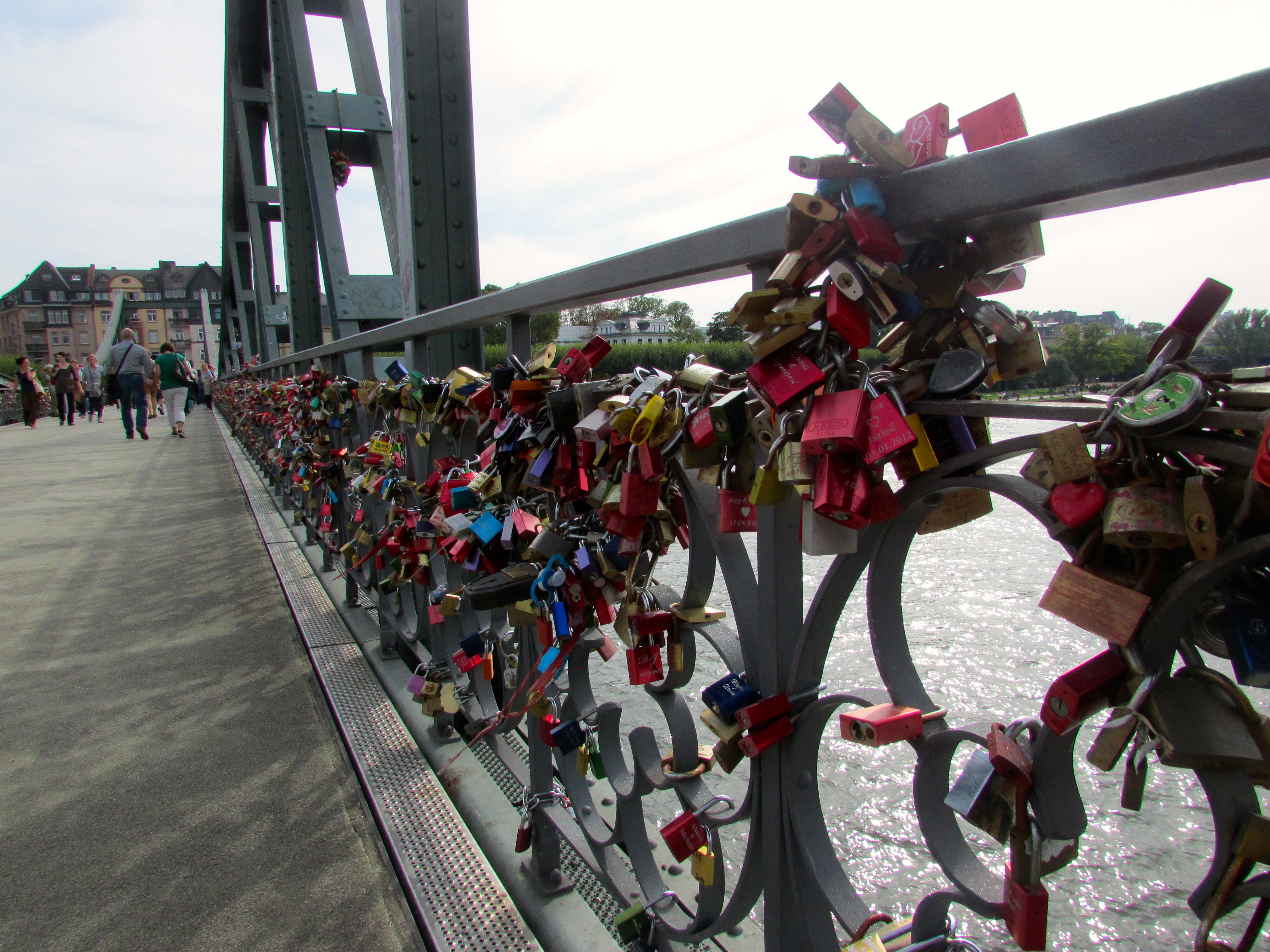
Eiserner Steg, Frankfurt, Germany - September 2014
Eiserner Steg, Frankfurt, Germany – September 2014

listening to: The Kooks

The Hardest Part of the Story

The only thing I’ve ever published on this blog and then deleted is still a hard story for me to tell. It’s one that needs to be told and one that I don’t try to hide, but I was far too emotionally invested to write about it appropriately.

People that have known me for a while remember when I got married back in 2010. Looking back at everything now, I realize that the marriage shouldn’t have happened in the first place because I was already far too consumed by my depression, but in the moment, it made sense. The marriage lasted three years. Most of it is now a blur to me, but there are still some very vivid memories.

I suppose I should start back before I even met him. I should start back at my freshman year of college. That was the year that everything started to change for me. That was the year that I partied far too often and invested time in some people that didn’t have good motives. That was the year that I lost any innocence and not all of it was by choice.

Fast forward to the next year when I met the guy I would later marry. There were moments at the very beginning that should have been clues that there was something wrong with my psyche. If I felt too constrained in a blanket or a hug was too tight, I wouldn’t be able to breathe, my eyes would instantly tear up, and my body would just freeze. Panic attacks would become more frequent as the years progressed, but I should have realized that something wasn’t quite right at the very beginning.

What started off as a casual friendship turned into a pretty serious relationship. I became dependent on him and went as far as to drop out of college and move to another state to be with him. That was when he proposed. Part of the reason for proposing was so that we could live together without the complete and utter disapproval from my parents.

Looking back, the year we spent together while engaged was a year of my emotional and mental health utterly deteriorating. I started waking up in the middle of the night because of panic attacks. There is nothing more terrifying than being unable to move and so frozen that your brain can’t process what is going on around you.

The wedding day quickly approached. I clearly remember wanting to call off the wedding day, but also being so concerned about what others would think if I did that I carried through with it. I was a mess the weekend of. There wasn’t a waking hour that I wasn’t fighting back tears. I thought it was happy nerves, but I’ve never been that out of control with my emotions, and I know now that the overwhelming emotions were more signs that there was something off.

We were married, and things were fine for a while. This is where things get even harder to talk about. I suppose typing it out is easier than verbalizing everything, but there were three different instances during the three years we were married that changed everything. It was a kind of abuse, the kind that is both hurtful and degrading, and I was completely unequipped to respond properly. After the third incident, I finally realized that there was nothing more important than getting out. I’ve always used the same example when explaining this, but it was as if there was a pane of glass that kept getting cracks in it until that third time. That final moment of hurt and abuse was enough to shatter the glass and make me realize just how badly I needed to remove myself from the situation.

I’ve found that this is a tricky topic to discuss for a couple of different reasons. For one, I needed to escape for my own health and safety, but I’m not out to paint my ex husband as an evil person. There are numerous great qualities about him, but I can’t look past the pain he caused me. I’ve never wanted revenge, but I wasn’t about to allow that hurt to continue. You hear about abuse happening, but you don’t imagine it happening in a seemingly happy marriage. You don’t imagine someone who is beloved by everyone who meets him could possibly laugh when confronted with the pain he’s caused somebody.

Secondly, I don’t want pity. I’ve never wanted people to feel sorry for me. It’s in the past now, and just like the other hurtful moments in my life, I’ve learned from it. I’ve learned how to stand up for myself and I’ve learned to be far less tolerant when confronted with similar issues. I’ve learned how strong I can be when it’s absolutely necessary, and I think that strength is my most beautiful quality. I’m proud of the person I’m becoming in my recovery.

So the reason I share the basic overview of this part of my story is this: I want more people to truly understand that there can be pain when everything looks perfect on the outside. I want people to be more willing to help when they think somebody might be hurting. Most importantly, I want people who might be experiencing something similar to know that they can be hopeful, that there is another side and a way out from the hurt. Recovery is possible even after the darkest moments.

Niederrad, Germany- October 2014

Niederrad, Germany- October 2014

listening to: Vance Joy

The Follow Up To the Problem

I wrote a post on my old blog about a major problem that I’ve experienced and seen in the “Christian” culture today back in April of 2013. Interestingly enough, this, out of everything else I wrote on that blog, was the one thing that I’ve had people make a point to tell me that they appreciated reading. Even more interesting is that the people who spoke to me were all people I knew from growing up in the church.

There’s a very common pattern of people growing up in the church and deciding to leave it as soon as they leave home. It’s been written about all over the internet by people far more educated than myself with tips and tricks to bring the “lost generation” back to the church. I’ve read more than my fair share of these articles, mostly rolling my eyes through most of them.

The reason my opinion of the church changed so drastically was because I saw the way people were treated when people saw them as “lost sheep”. There’s one attitude when a group of people are out on a mission trip to try and reach as many people as they can, but then there’s the everyday attitude: stay in your comfortable bubble with your friends and your nice things, and don’t make an effort to help or reach out to people you know are hurting.

This is not what Jesus was about. This is not what the early church was about. Somewhere along the way, the message got twisted. I’m going to quote Donald Miller just like I did in my last post about this topic, simply because he writes the words I wish I had been brilliant enough to write: “I loved the fact that it wasn’t my responsibility to change somebody, that it was God’s, that my part was just to communicate love and approval” (Blue Like Jazz). This is what the church should be doing. The church should be showing love to everyone, no matter if they agree with the actions and behaviors surrounding a person.

Many of the friends I have that have stopped going to church or associating themselves with the modern American church have done so because of the lack of pure love that many prominent figures that claim “Christianity” have show to mass amounts of people. Sure, they love the people that fit into their idea of a proper Christian, but are they loving the people that don’t? Are they loving the people that have different views on relationships, lifestyles, or even politics? Are they friendly toward the ones they call sinners? No, and that’s the main problem I have. Jesus was friends with all sorts of people. He loved all people. It didn’t matter their race, background, decisions. That should be the example for Christians today.

If you’re one of those people that despairs over the amount of millennials who have left the church, take a look at how you portray your beliefs on a regular basis. I think the Bible says it best: “The command we have from Christ is blunt: Loving God includes loving people. You’ve got to love both.” (1 John 4:21)

Berliner Dom, Berlin, Germany - May 2014
Berliner Dom, Berlin, Germany – May 2014

listening to: Amos Lee